POLITICS
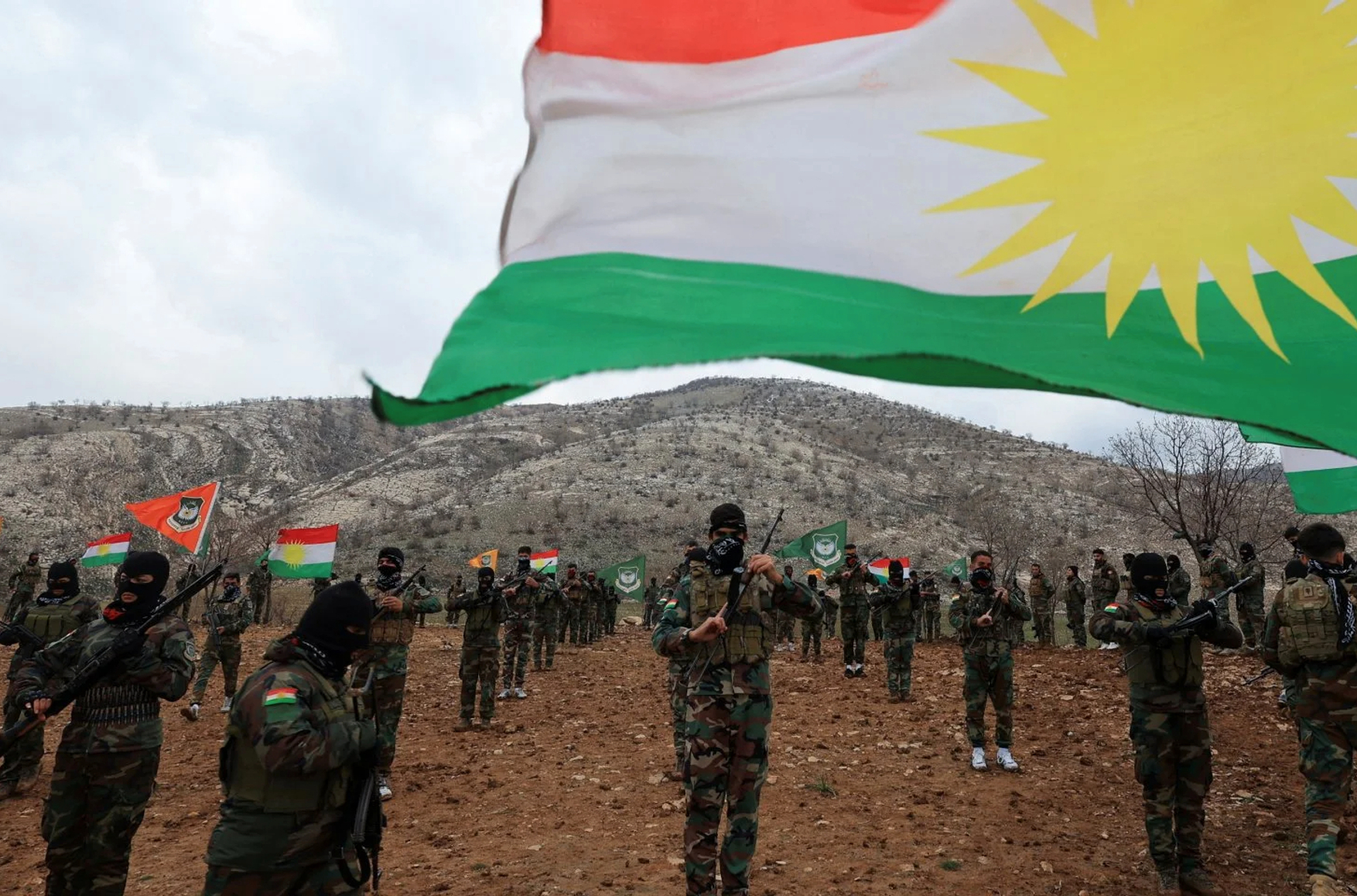
After the failure of its Iranian blitzkrieg, Washington’s “plan B” may be to enlist Kurdish forces in the fight against the regime in Tehran — not only Iranian Kurds, but also those from neighboring Iraq. But it will not be easy. Deep ideological divisions exist among the various Kurdish groups, and their general distrust of the United States after decades of betrayal will not aid the Trump administration’s cause. In the end, Kurdish efforts are highly unlikely to prove decisive in Iran, but that does not mean the White House will refrain from trying to enlist the Kurds in its fight.
Iraq as a refuge
Clans and parties in the Iraqi Kurdish militia
Criticism of the Americans
Monarchy versus republic
In some key respects, the war waged by the U.S. and Israel against Iran mirrors another war — the one Russia is waging against Ukraine. First, the U.S. military and its political leadership, much like Russia’s in 2022, appears to have had no backup plan in the event that the opponent refused to capitulate in the first days. Second, the entourage of U.S. President Donald Trump, much like Vladimir Putin’s, is busy coining euphemisms to portray a full-fledged war as something less bloody and dangerous than what it really is. Where the Russians came up with “special military operation,” the Americans speak of “limited combat operations.” And just as Putin once appealed directly to Ukrainians for help in overthrowing their leaders, Trump is now counting on Iranian and Iraqi Kurds, hoping that their participation will turn the tide of the fighting. The chances that the Kurds will respond to his call are clearly greater than those Putin had with Ukrainians — but even if the Kurds do begin following American instructions, that still wouldn’t be enough to guarantee a U.S. victory.
On March 3, 2026 — the fourth day of the war against Iran — Trump called Mustafa Hijri, a politician popular among Iranian Kurds. Just a week before the start of the war, Hijri had created the Coalition of Political Forces of Iranian Kurdistan.
On the eve of this phone call, the opposition Coalition published its first declaration, calling on Iranians to engage in acts of civil resistance against the regime and urging soldiers and officers of the army and security services to break with the “remnants of the Islamic regime.” The Coalition warned that switching to the side of the people was their last chance to survive.
According to information leaked to journalists, Trump asked Hijri to move beyond calls and take up arms against the regime of the ayatollahs. Around the same time, Trump reportedly made a similar proposal to Kurdish leaders in neighboring Iraq.
In both cases, the American president promised his interlocutors assistance with weapons and intelligence, as well as air support for their offensive. However, the conversation with Iraqi Kurdish leaders reportedly included a direct ultimatum: either you support us and our plan, or we will consider you allies of the Iranian authorities.
Southern Kurds, belonging to the Ahl-e Haqq religious group — a Shiite mystical–gnostic sect.
An ethno-religious group indigenous to Kurdistan, practicing a syncretic religion known as Yazidism.
Trump’s conversation with Iraqi Kurdish leaders reportedly included a direct ultimatum: either you support us and our plan, or we will consider you allies of the Iranian authorities
In broad terms, the American plan would involve Kurdish units armed by the United States and covered by U.S. air power launching an uprising aimed at taking control of Iran’s northwestern provinces (those predominantly populated by Kurds) in the hopes of inspiring other citizens of the Islamic Republic to take up arms against the ayatollahs.
On paper, such a plan looks fairly straightforward. But the implementation of this will be hindered by a whole range of factors that the White House prefers not to mention in its official statements.
First, the Coalition of Political Forces of Iranian Kurdistan is an alliance hastily formed after the regime’s bloody crackdown on anti-government protests in the winter of 2025. It consists of parties and groups that are not always friendly with one another, and which often have conflicting agendas.
Representatives of these forces have expressed a willingness to set aside their differences in order to replace the regime with a secular and democratic government and establish Kurdish national autonomy in Iran. However, the long and often bloody history of conflicts among the coalition’s members could seriously complicate their collaboration.
To begin with, the six forces within the Coalition are highly diverse ideologically. Among them are nationalist parties that are inclined to cooperate with the United States and Israel, but there are also communist groups that view the two powers not as allies but as imperialist occupiers.
Presently, nationalists from the Democratic Party of Iranian Kurdistan have joined forces with Marxists from the Komala group, a collection of communist factions. In the 1980s and 1990s, however, these entities fought an actual war against one another, resulting in hundreds of deaths on both sides. The nationalists are convinced that the communists provoked the conflict and have never forgiven them for it.
Southern Kurds, belonging to the Ahl-e Haqq religious group — a Shiite mystical–gnostic sect.
An ethno-religious group indigenous to Kurdistan, practicing a syncretic religion known as Yazidism.
In the 1980s and 1990s, Kurdish communists and nationalists fought an actual war that claimed hundreds of lives on both sides
Moreover, Marxists are often accused of placing global (or at least regional) revolution above the liberation of their own people. Because of their internationalist orientation, many suspect Komala of acting in the interests of foreign powers, and the group’s official social media announcement about joining the coalition drew overwhelmingly negative comments from other Kurds.
The contradictions are not limited to the conflict between the communist and nationalist camps. Factional struggles within Komala itself occasionally go beyond political debates, resulting in fatal armed clashes.
The main problem for the Coalition is that Komala’s Marxists have no desire to fight for the interests of the United States and Israel, arguing that such cooperation risks turning Kurdish areas into a zone of global war. Instead, they advocate fighting the Islamic Republic solely with Kurdish forces.
Southern Kurds, belonging to the Ahl-e Haqq religious group — a Shiite mystical–gnostic sect.
An ethno-religious group indigenous to Kurdistan, practicing a syncretic religion known as Yazidism.
![[object Object]](data:image/jpeg;base64,iVBORw0KGgoAAAANSUhEUgAAAAEAAAABCAAAAAA6fptVAAAACklEQVR4nGNiAAAABgADNjd8qAAAAABJRU5ErkJggg==)
Iraqi Kurds from the Peshmerga during the war against ISIS, 2014–2016
Photo: The Insider
Iraqi Kurds from the Peshmerga during the war against ISIS, 2014–2016
Photo: The Insider
Iraqi Kurds from the Peshmerga during the war against ISIS, 2014–2016
Photo: The Insider
Iraqi Kurds from the Peshmerga during the war against ISIS, 2014–2016
Photo: The Insider
Iraqi Kurds from the Peshmerga during the war against ISIS, 2014–2016
Photo: The Insider
In other words, the six different political forces within the Coalition are divided on numerous fundamental issues, from acceptable sources of assistance to the principles and values that ought to underpin a renewed Iranian Kurdistan should the regime in Tehran be overthrown. These contradictions put the alliance at risk not only of collapse, but of actual conflict among its members.
Notably, the Coalition has relatively few fighters with combat experience. Estimates of the combined strength of its armed units range between 4,000 and 8,500 fighters. Of these, only a few hundred to a couple of thousand have experience in modern warfare, gained in battles against ISIS in neighboring Iraq and Syria.
For comparison, the Islamic Revolutionary Guard Corps alone numbers between 250,000 and 300,000 personnel. In addition, the ayatollahs have the army, police, and security services at their disposal. In short, Iranian Kurdish forces cannot hope to carry out even a moderately successful ground operation — which is precisely why Trump also reached out to the Kurds of Iraq.
For decades, most of the Iranian Kurds’ armed units took refuge from Tehran in neighboring Iraq. Their relocation began shortly after the Islamic Revolution of 1979, which viewed regional nationalism as a threat.
During the Iran–Iraq War, Saddam Hussein’s regime armed and trained the Iranian Kurds living on its territory, using them as proxy forces against Tehran. Even after Hussein’s regime fell amid the American invasion of 2003 and the autonomous region of Iraqi Kurdistan was established, Kurdish groups maintained both their presence and their bases in Iraq. In exchange for permission to remain in Iraqi Kurdistan, the Iranian Kurds pledged not to interfere in internal political processes or attempt to launch a large-scale war against Tehran. Nevertheless, their small sporadic incursions by Kurdish fighters into Iranian territory still angered the ayatollahs.
In 2022, after mass protests in Iran claimed more than 500 lives, the ayatollahs accused Iranian Kurds hiding in Iraq of provoking the bloodshed. Tehran warned Baghdad that it was prepared to deal with the threat itself, even at the risk of violating Iraqi sovereignty.
The central Iraqi authorities chose not to escalate tensions with their neighbor, promising to restore order. Under pressure from Baghdad, the government of Iraqi Kurdistan moved the bases of Iranian Kurdish fighters further from the border with Iran and took control of their supply routes and movements. In other words, Iranian Kurdish armed units have no way of returning to their homeland without the Iraqi Kurdistan officials’ approval.
Southern Kurds, belonging to the Ahl-e Haqq religious group — a Shiite mystical–gnostic sect.
An ethno-religious group indigenous to Kurdistan, practicing a syncretic religion known as Yazidism.
Without the consent of Iraqi Kurdistan officials, Iranian Kurdish armed units have no way to return to their homeland
Most likely, Trump called the leaders of the Iraqi Kurds in an effort to secure permission for Iranian fighters to cross the border, and it appears that the consent was granted. The commanders of Iranian Kurdish units in Iraq have stated their readiness to attack targets in Iran in the near future. Meanwhile, Trump is debating the potential benefits of an intervention by Iranian Kurds based in Iraq.
But there are problems. The numbers and training level of Iranian Kurdish fighters are entirely insufficient to achieve a military victory, meaning the far more numerous and experienced Kurdish fighters from Iraq must somehow be brought into the fighting. Several American media outlets even rushed to report that Iraqi Kurds had already crossed the border in order to take part in the war against Tehran. However, officials in Iraqi Kurdistan have denied such stories, stating that no armed individuals have crossed over. Moreover, Iraqi authorities are deploying additional border forces to areas adjacent to Iran — likely to prevent unauthorized crossings.
Reports of an invasion of Iran by Iraqi Kurds in pro-Republican media are indeed wishful thinking, rather than reality. It is well known in the U.S. that the Iraqi Kurdish militia, the Peshmerga, is a far larger and more capable force than the Iranian Kurdish groups.
The Peshmerga number at least 150,000, and most of the fighters have relatively recent combat experience fighting ISIS. Sooner or later, the Americans are almost certain to be tempted to use these forces in the war against Iran if no turning point is achieved in the foreseeable future.
But the Peshmerga, like Iranian Kurdish groups, is not a centralized army. Two main clans, the Barzanis and the Talabanis, have long competed for influence in Iraqi Kurdistan, represented by the Democratic Party of Kurdistan and the Patriotic Union of Kurdistan. The tensions between the two clans are so serious that they even sparked a civil war in Iraqi Kurdistan in the 1990s.
Southern Kurds, belonging to the Ahl-e Haqq religious group — a Shiite mystical–gnostic sect.
An ethno-religious group indigenous to Kurdistan, practicing a syncretic religion known as Yazidism.
The Peshmerga, like Iranian Kurdish fighting groups, is not a centralized army
The armed confrontation is long past, but a stable peace between the two sides has yet to be achieved. Most Peshmerga fighters answer to either one or the other of the rival clans. Moreover, the Patriotic Union of Kurdistan had previously allied with the Islamic Republic of Iran during the civil war, which could significantly affect any potential plans to use Talabani-controlled units in a war against Tehran. One of the clan’s leaders, Jalal Talabani, has openly opposed the very idea of involving Iraqi Kurds in a war against the regime in Tehran, which, according to him, shows no signs of imminent collapse.
The problems of the Iraqi Kurdish militia are not limited to their allegiance to different clans and parties. The Peshmerga include units of Yazidis, Christians (Assyrians and Armenians), and Yarsanis, who often face disdain from fellow Muslim Kurds. Confessional differences also negatively affect the combat effectiveness of Iraqi Kurdistan’s formations. From time to time, reports even emerge of mass desertions from the Peshmerga by members of ethnic and religious minorities unwilling to tolerate humiliation at the hands of Kurds.
In short, Washington would be ill-advised to count on the Peshmerga to rescue its war effort in Iran.
The situation is further complicated by Kurdish distrust of the United States, stated almost explicitly by Shahnaz Ibrahim Ahmed, the wife of Iraqi President Abdul Latif Rashid, a Kurd by origin. On March 5, the First Lady’s office issued a press release calling for Kurds not to be used as mercenaries.
Her statement references the events of 1991, when the Americans, already at war with Iraq following Hussein’s invasion of neighboring Kuwait, called on dissatisfied Iraqi citizens to support them. U.S. President George H. W. Bush addressed the Iraqis at least twice, urging them to take up arms and overthrow Hussein’s rule. The Kurds responded to this call but were left to face the Iraqi army alone, receiving none of the anticipated support from their overseas allies. As a result, tens of thousands were killed, and hundreds of thousands became refugees.
Southern Kurds, belonging to the Ahl-e Haqq religious group — a Shiite mystical–gnostic sect.
An ethno-religious group indigenous to Kurdistan, practicing a syncretic religion known as Yazidism.

Shahnaz Ibrahim Ahmed’s statement also mentions the recent war against ISIS. The United States assisted Syrian Kurds for years in that fight, but after the overthrow of Bashar al-Assad’s regime in Damascus, the U.S. shifted its focus to establishing relations with the new authorities, who opposed the Kurds’ attempts to build autonomy in northern Syria. As a result, when the new Syrian government of Ahmed al-Sharaa forcibly took control of Syrian Kurdistan, the Americans did not come to the aid of their recent allies, leaving the Kurds with an aftertaste of ingratitude and betrayal.
“Too often, the Kurds are remembered only when their strength and willingness to sacrifice are needed. Therefore, I address all parties to the conflict: leave the Kurds alone. We are not your mercenaries,” Iraq’s First Lady wrote in the conclusion of her statement.
Southern Kurds, belonging to the Ahl-e Haqq religious group — a Shiite mystical–gnostic sect.
An ethno-religious group indigenous to Kurdistan, practicing a syncretic religion known as Yazidism.
“Leave the Kurds alone. We are not your mercenaries,” stated the office of Iraq’s First Lady, a Kurd by origin
The appeal to all parties is likely a diplomatic ploy. Both the English language of the press release and the historical episodes it cites clearly indicate that it is primarily addressed to an American audience.
Another potential hindrance is distrust toward the Kurds by parts of the Iranian opposition. Iran’s hereditary shah, Reza Pahlavi, who openly expresses his desire to reclaim the throne taken from his father in 1979, accuses Kurdish parties and groups of separatism and of collaborating with the regimes of the ayatollahs and Saddam Hussein. In his criticism of the Kurdish forces (which he vaguely refers to as “a few separatist groups”), Pahlavi goes so far as to promise to deal with them using the Iranian army once he becomes its supreme commander.
The Coalition of Political Forces of Iranian Kurdistan responded to these statements by pointing out that the monarchy in Iran was repressive and brutal. The Kurds also expressed doubt that Iranians would be willing to return under the rule of a dynasty tainted by crimes against its own people.
All things considered, one could conclude that no unified Kurdish army capable of defeating the ayatollahs’ forces exists — or has ever existed. The Kurds have reasons to distrust the United States, the Iranian opposition, and even each other. Some of them sympathize with the Islamic Republic of Iran, while others continue to dream of creating an independent Kurdistan at least in part on Iranian territory.
The White House is unlikely to have a remedy for overcoming decades of accumulated grievances and disagreements sufficiently to consolidate the fragmented Kurdish parties and groups into a force capable of taking on Iran’s regular army. Nevertheless, the absence of such a remedy in no way guarantees that Washington will leave the Kurds alone, nor that it will abandon attempts to win the war using their armed assistance.
Southern Kurds, belonging to the Ahl-e Haqq religious group — a Shiite mystical–gnostic sect.
An ethno-religious group indigenous to Kurdistan, practicing a syncretic religion known as Yazidism.
К сожалению, браузер, которым вы пользуйтесь, устарел и не позволяет корректно отображать сайт. Пожалуйста, установите любой из современных браузеров, например:
Google Chrome Firefox Safari